
Does an EMG Hurt? What You Should Expect During the Procedure
- posted: Dec. 10, 2025
Electromyography (EMG) is a valuable diagnostic test used to evaluate nerve and muscle function. For many patients, the first question is simple: “Does an EMG hurt?” Understanding what the procedure involves can ease anxiety and help you feel confident when scheduling the test. At Rehabilitation Physicians, PC, with offices in Novi and Howell, Michigan, physicians use EMG testing to diagnose a wide range of neurological and musculoskeletal conditions, guiding effective treatment plans.
Why an EMG Is Performed
Generally speaking, EMG testing helps doctors determine the communication effectiveness of nerves with muscles. Symptoms such as tingling, numbness, weakness, or unexplained pain may suggest a nerve disorder, in which case it is very important to establish the origin of the problem using EMG. The test is commonly used to evaluate conditions like carpal tunnel syndrome, radiculopathy, peripheral neuropathy, or muscle disorders affecting strength and movement.
An EMG provides clear information about where nerves are irritated or compressed, supporting accurate diagnosis and individualized treatment.
What You Can Expect During the Procedure
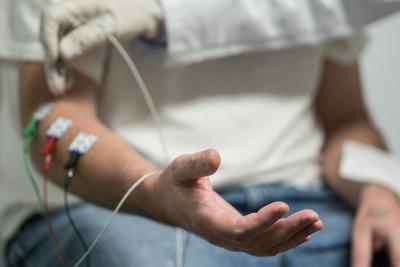
An EMG has two parts. The first part is nerve conduction testing, in which small surface electrodes are placed on the skin. Mild electrical pulses are delivered to stimulate the nerves and measure their response. Patients often describe the sensation as quick tapping or a brief tingling feeling.
The second part involves the insertion of a thin, sterile needle electrode into selected muscles. This electrode records the electrical activity of the muscle at rest and during movement of the affected limb. The needle is very fine, and although you may experience some brief discomfort as it is placed, most patients tolerate it well. Each recording lasts only a few seconds, after which the needle is removed immediately.
Does an EMG Hurt?
Most patients experience only mild, temporary discomfort during an EMG. Sensations vary based on the area being tested, but pain is usually described as a short pinch or pressure rather than a lasting ache. There is no cutting or incision involved. After the test, slight soreness in the muscle may occur, but it typically resolves within a few hours.
Your physician will explain each step before it happens, helping you feel relaxed and informed throughout the procedure.
How to Prepare and What Happens After
Preparation for an EMG is simple. Patients are asked to avoid lotions or oils on the skin the day of the test and to share a full medication list with their provider. After the test, results are reviewed to determine whether nerve function is normal or impaired. These findings help guide treatments such as physical therapy, medication, splinting, or further testing when needed.
EMG Testing in Novi and Howell, MI
If you have symptoms of nerve irritation or unexplained muscle weakness, an EMG can provide important answers. At Rehabilitation Physicians, PC, our team performs EMG testing with precision and care, helping patients understand their condition and begin the right treatment path.
To schedule an evaluation in Novi or Howell, MI, call Rehabilitation Physicians, PC at (248) 893-3200.
- posted: Dec. 10, 2025
Electromyography (EMG) is a valuable diagnostic test used to evaluate nerve and muscle function. For many patients, the first question is simple: “Does an EMG hurt?” Understanding what the procedure involves can ease anxiety and help you feel confident when scheduling the test. At Rehabilitation Physicians, PC, with offices in Novi and Howell, Michigan, physicians use EMG testing to diagnose a wide range of neurological and musculoskeletal conditions, guiding effective treatment plans.
Why an EMG Is Performed
Generally speaking, EMG testing helps doctors determine the communication effectiveness of nerves with muscles. Symptoms such as tingling, numbness, weakness, or unexplained pain may suggest a nerve disorder, in which case it is very important to establish the origin of the problem using EMG. The test is commonly used to evaluate conditions like carpal tunnel syndrome, radiculopathy, peripheral neuropathy, or muscle disorders affecting strength and movement.
An EMG provides clear information about where nerves are irritated or compressed, supporting accurate diagnosis and individualized treatment.
What You Can Expect During the Procedure
An EMG has two parts. The first part is nerve conduction testing, in which small surface electrodes are placed on the skin. Mild electrical pulses are delivered to stimulate the nerves and measure their response. Patients often describe the sensation as quick tapping or a brief tingling feeling.
The second part involves the insertion of a thin, sterile needle electrode into selected muscles. This electrode records the electrical activity of the muscle at rest and during movement of the affected limb. The needle is very fine, and although you may experience some brief discomfort as it is placed, most patients tolerate it well. Each recording lasts only a few seconds, after which the needle is removed immediately.
Does an EMG Hurt?
Most patients experience only mild, temporary discomfort during an EMG. Sensations vary based on the area being tested, but pain is usually described as a short pinch or pressure rather than a lasting ache. There is no cutting or incision involved. After the test, slight soreness in the muscle may occur, but it typically resolves within a few hours.
Your physician will explain each step before it happens, helping you feel relaxed and informed throughout the procedure.
How to Prepare and What Happens After
Preparation for an EMG is simple. Patients are asked to avoid lotions or oils on the skin the day of the test and to share a full medication list with their provider. After the test, results are reviewed to determine whether nerve function is normal or impaired. These findings help guide treatments such as physical therapy, medication, splinting, or further testing when needed.
EMG Testing in Novi and Howell, MI
If you have symptoms of nerve irritation or unexplained muscle weakness, an EMG can provide important answers. At Rehabilitation Physicians, PC, our team performs EMG testing with precision and care, helping patients understand their condition and begin the right treatment path.
To schedule an evaluation in Novi or Howell, MI, call Rehabilitation Physicians, PC at (248) 893-3200.